


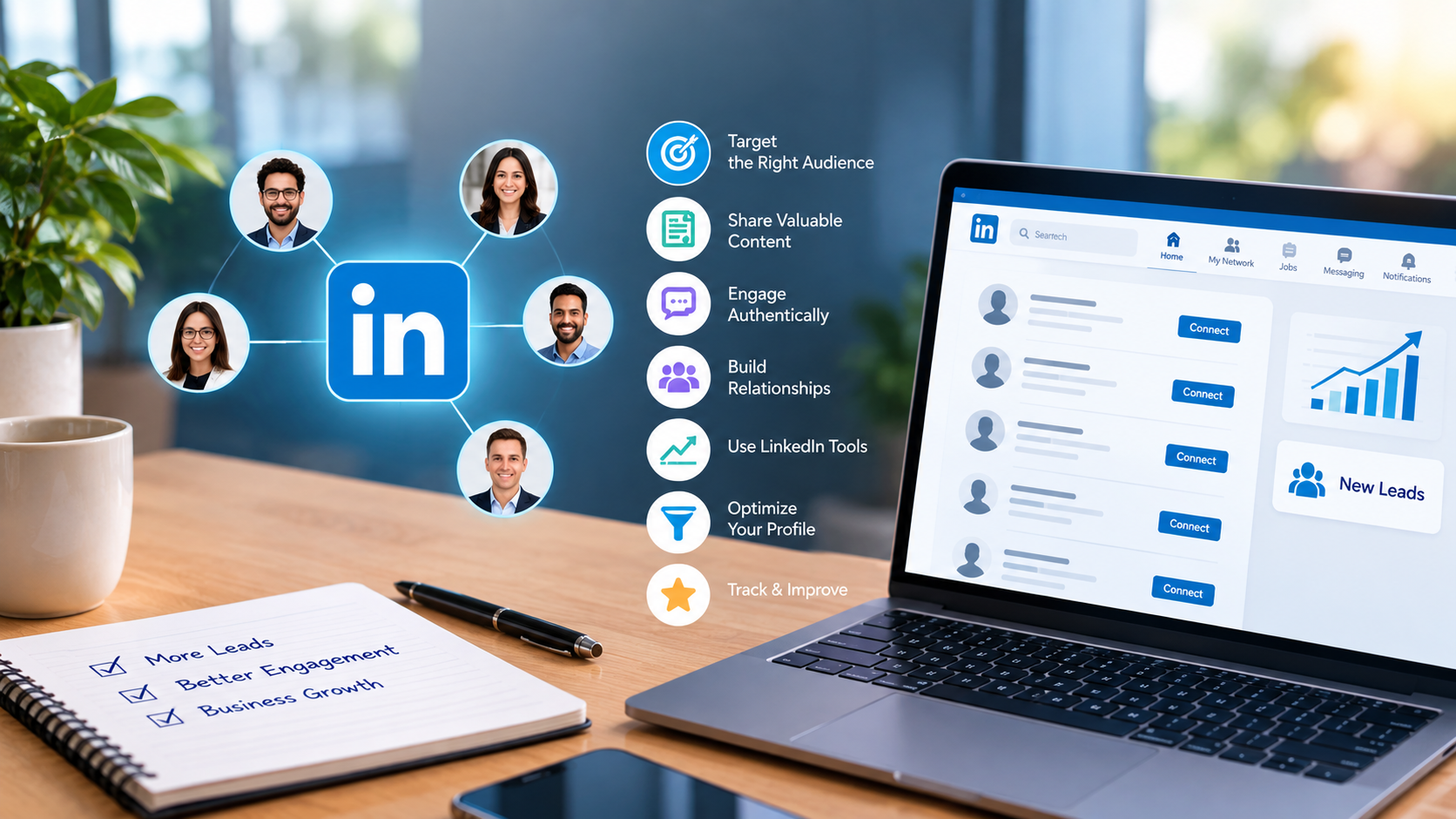
LinkedIn Lead Generation in 2026: 7 Strategies for B2B Businesses
LinkedIn has become an important platform for B2B businesses looking to connect with decision-makers, build credibility, and generate qualified leads.
But successful LinkedIn lead generation is not about sending hundreds of connection requests or posting promotional content every day. It is about reaching the right audience with useful content and building relationships that can eventually turn into business opportunities.
Here are seven practical strategies B2B businesses can use in 2026.
1. Define Your Ideal Customer
Before starting your LinkedIn marketing strategy, identify exactly who you want to reach.
Consider factors such as industry, company size, location, job title, seniority, and business challenges.
For example, instead of targeting every marketing professional, a B2B software company could focus on marketing directors and VPs at mid-sized technology companies.
A clear ideal customer profile helps you create more relevant content and reach prospects who are more likely to need your services.
2. Create Content That Solves Real Problems
Useful content is at the center of effective LinkedIn B2B marketing.
Instead of constantly promoting your services, answer questions and solve problems that your potential customers are already facing.
You can create:
- How-to guides
- Industry insights
- Case studies
- Checklists
- Short videos
- Expert opinions
- Research-based posts
For example, a digital marketing agency could create content around B2B SEO, website conversion, content marketing, and lead generation.
The goal is simple: give your audience useful information before asking them to buy anything.
3. Build Your Employees’ Personal Brands
Your company page is important, but your employees can also play a major role in B2B lead generation.
Founders, executives, marketers, and subject-matter experts can share their experience and knowledge through their personal LinkedIn profiles.
They can discuss:
- Industry trends
- Lessons from projects
- Customer challenges
- Practical advice
- Professional experiences
- New developments in their industry
People are often more interested in insights from real professionals than in company advertisements. Building employee visibility can therefore support your overall LinkedIn marketing strategy.
4. Use LinkedIn Ads to Reach the Right Audience
Organic content is valuable, but paid advertising can help businesses reach specific B2B audiences.
LinkedIn Ads allow businesses to target users using professional information such as job title, industry, company, and seniority.
For example, a B2B technology company could target IT decision-makers at companies within a particular industry and company-size range.
LinkedIn Lead Gen Forms can also make it easier for interested prospects to submit their information without leaving the platform.
The key is to keep your targeting focused on your ideal customers rather than trying to reach everyone.
5. Offer Valuable Resources
A useful resource can give prospects a reason to share their contact information.
B2B businesses can create lead magnets such as:
- Industry reports
- Whitepapers
- Checklists
- Webinars
- Templates
- Case studies
- Practical guides
For example, an SEO agency could offer a B2B SEO Audit Checklist to businesses that want to evaluate their website’s search performance.
Your resource should be closely related to your service and provide genuine value. This helps attract people who have a relevant business need rather than simply increasing the number of leads.
6. Focus on Relationships, Not Just Sales
One of the biggest mistakes businesses make on LinkedIn is turning every connection into an immediate sales opportunity.
Instead, focus on building professional relationships.
Research a prospect before reaching out. Understand their role and company. Engage with relevant content and share useful information when appropriate.
Not every conversation needs to end with a sales pitch.
When you consistently provide value, potential customers become more familiar with your expertise. When they eventually need a solution you provide, your company may already be on their shortlist.
7. Measure Lead Quality and Business Results
Likes, comments, and followers can show that your content is receiving attention, but they do not tell the whole story.
For B2B lead generation, track metrics that connect LinkedIn activity with business results.
Important metrics include:
- Website traffic
- Leads generated
- Cost per lead
- Marketing-qualified leads
- Sales-qualified leads
- Sales opportunities
- Conversion rates
- Pipeline generated
Review these metrics regularly to understand which content, audiences, and campaigns are producing meaningful results.
Final Thoughts
LinkedIn can be a valuable channel for B2B lead generation in 2026, but success requires more than frequent posting or cold outreach.
Start by understanding your ideal customer, create content that solves real problems, build professional credibility, use targeted advertising when appropriate, and develop genuine relationships with prospects.
Most importantly, focus on relevant and qualified leads rather than simply generating a higher number of leads.
With a consistent LinkedIn marketing strategy, businesses can turn the platform into an important part of their broader B2B marketing and lead generation efforts.