


Cybersecurity is no longer something only large enterprises need to worry about. In 2026, businesses of every size rely on digital tools, cloud platforms, and connected devices to run daily operations. While technology continues to improve, cyber criminals are also becoming more sophisticated, making it essential for organizations to stay ahead of emerging threats.
A single cyberattack can lead to financial losses, operational downtime, and damage to customer trust. That’s why understanding the latest cybersecurity trends isn’t just helpful—it’s a business necessity.
In this article, we’ll explore the biggest cybersecurity trends businesses should pay attention to in 2026 and how you can prepare your organization for a safer digital future.
Why Cybersecurity Matters More Than Ever
Modern businesses store valuable information such as customer records, payment details, employee data, and confidential business documents online. As more work moves to cloud-based systems and remote environments, attackers have more opportunities to exploit security weaknesses.
Investing in cybersecurity today helps businesses:
- Protect sensitive business and customer data
- Reduce the risk of costly cyberattacks
- Build customer trust and confidence
- Meet regulatory and compliance requirements
- Keep business operations running smoothly
Rather than reacting after an attack, businesses are now focusing on preventing security incidents before they happen.
1. AI Is Transforming Cybersecurity
Artificial intelligence is becoming one of the most important tools in cybersecurity. Security teams use AI to monitor network activity, detect unusual behavior, and respond to threats much faster than traditional systems.
At the same time, cyber criminals are also using AI to create more convincing phishing emails, automate attacks, and identify vulnerabilities more efficiently.
Businesses should use AI-powered security tools while continuing to rely on human expertise for monitoring and decision-making.
Best Practices
- Use AI-powered threat detection
- Monitor unusual login attempts
- Keep security systems updated regularly
- Combine AI with human oversight
2. Zero Trust Security Is Becoming the Standard
The traditional approach of trusting users once they’re inside a company network is no longer enough.
Zero Trust follows a simple principle:
Never trust, always verify.
Every employee, device, and application must continuously prove its identity before accessing company resources.
Many businesses are adopting Zero Trust because employees now work remotely, use personal devices, and access cloud applications from multiple locations.
Key Features
- Multi-factor authentication (MFA)
- Identity verification
- Device security checks
- Least-privilege access
- Continuous monitoring
3. Ransomware Attacks Continue to Evolve
Ransomware remains one of the biggest cybersecurity threats in 2026.
Instead of simply encrypting files, attackers often steal sensitive information before demanding payment. This creates additional pressure because businesses risk both losing access to their systems and having confidential data exposed.
The best defense is prevention.
Businesses should:
- Back up important files regularly
- Keep software updated
- Train employees to identify phishing emails
- Test recovery plans
- Segment critical systems
4. Cloud Security Is a Top Priority
Cloud computing continues to grow, but so do cloud-related security risks.
Misconfigured cloud storage, weak passwords, and poor access controls remain common causes of data breaches.
Businesses should review cloud security settings regularly and ensure employees only have access to the resources they need.
Important cloud security practices include:
- Encrypt sensitive data
- Enable MFA
- Monitor user activity
- Review permissions regularly
- Choose trusted cloud providers
5. Employee Awareness Is Still One of the Strongest Defenses
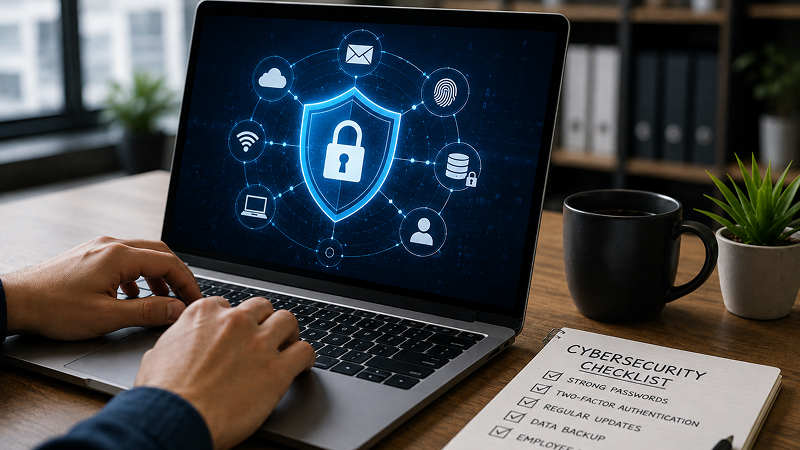
Technology alone cannot stop every cyberattack.
Many successful attacks begin with simple human mistakes, such as clicking a malicious link or downloading an infected attachment.
Regular cybersecurity awareness training helps employees recognize suspicious emails, fake websites, and social engineering tactics.
Topics to cover include:
- Phishing scams
- Password security
- Safe file sharing
- Secure remote working
- Reporting suspicious activity
An informed team can prevent many attacks before they cause damage.
6. Strong Identity and Access Management Is Essential
Businesses now use dozens of online applications every day. Managing who has access to each system is becoming increasingly important.
Identity and Access Management (IAM) helps organizations control user permissions and reduce unauthorized access.
Good IAM practices include:
- Strong passwords
- Password managers
- Multi-factor authentication
- Role-based access
- Automatic removal of inactive accounts
7. Internet of Things (IoT) Devices Need Better Protection
Many organizations now rely on smart devices such as security cameras, sensors, printers, and industrial equipment connected to the internet.
Unfortunately, these devices often receive less security attention than laptops or servers.
Businesses should:
- Change default passwords
- Install firmware updates
- Separate IoT devices from main business networks
- Monitor connected devices regularly
Proper IoT security reduces the risk of attackers gaining access through vulnerable devices.
8. Data Privacy and Compliance Continue to Grow
Customers expect businesses to protect their personal information.
Governments around the world are also introducing stronger data privacy regulations.
Businesses should understand which customer data they collect, why they collect it, and how long they store it.
Good privacy practices include:
- Collect only necessary information
- Encrypt stored data
- Delete outdated records
- Be transparent about data usage
- Review compliance requirements regularly
Protecting customer privacy strengthens both security and trust.
9. Security Is Becoming Part of Everyday Business Strategy
Cybersecurity is no longer just an IT responsibility.
Business leaders, executives, and employees all play a role in protecting company assets.
Organizations are increasingly including cybersecurity in business planning, budgeting, employee training, and risk management.
Companies that treat cybersecurity as an ongoing business priority are generally better prepared to respond to evolving threats.
How Businesses Can Stay Protected in 2026
Every business can improve its cybersecurity by following a few simple practices:
- Keep all software and operating systems updated.
- Enable multi-factor authentication wherever possible.
- Back up important business data regularly.
- Train employees to recognize cyber threats.
- Limit access to sensitive information.
- Monitor systems for unusual activity.
- Create and test an incident response plan.
- Review cybersecurity policies on a regular basis.
Small improvements made consistently can significantly reduce security risks.
Final Thoughts
Cybersecurity continues to evolve as businesses adopt new technologies and cybercriminals develop more advanced attack methods. Staying informed about the latest cybersecurity trends in 2026 allows organizations to strengthen their defenses before problems occur.
Whether your business is large or small, investing in employee awareness, cloud security, AI-powered protection, and modern access controls can make a meaningful difference. Cybersecurity isn’t just about preventing attacks—it’s about protecting your customers, maintaining trust, and ensuring your business can continue operating with confidence.
Preparing today will help your business stay secure in the years ahead.